Every day, tonnes of leftover food from homes, hotels, and markets quietly make their way into overflowing landfills. It may seem harmless — but the reality is, that rotting food is heating up our planet.
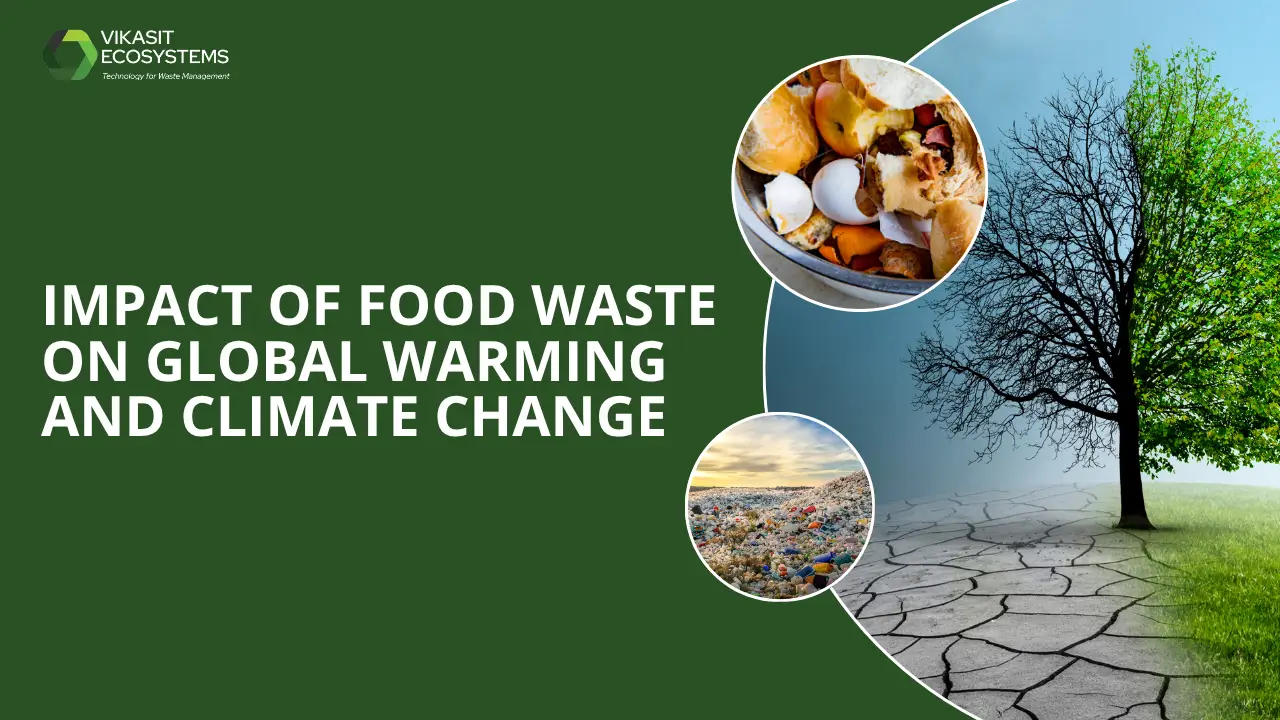
Globally, nearly one-third of all food produced never gets eaten. Once dumped, it decomposes without oxygen, releasing methane, a greenhouse gas 25 times more potent than carbon dioxide. According to the UN, food waste alone accounts for 8–10% of total global greenhouse gas emissions.
In other words, the food we waste could actually be cooking the planet. At Vikasit Ecosystems, we see this every day in our waste management projects — and we know that with the right systems, this waste can be turned into a resource instead of a problem.
How Food Waste Fuels Global Warming
When food decomposes in oxygen-deprived landfills, it produces methane (CH₄) and carbon dioxide (CO₂) — both of which trap heat in the atmosphere.
But that’s only part of the story. Think of all the resources behind a single meal — the water, electricity, fertilizer, transport fuel, and labor that went into producing it. When that meal is wasted, so are all the emissions linked to growing, packaging, and transporting it.
In short: we’re heating the planet twice — once by producing the food, and again by throwing it away.
The Greenhouse Gas Problem
Methane is an especially powerful climate pollutant. Even though it stays in the atmosphere for a shorter time than CO₂, it traps much more heat.
In India, where organic waste forms nearly 50–55% of municipal solid waste, unmanaged landfills are among the biggest sources of methane emissions.
This is why scientifically managed waste treatment systems — composting units, organic waste converters, and biogas plants — are vital in urban planning.
At Vikasit Ecosystems, we help design and install organic waste conversion systems that stop methane at its source — turning waste into compost or clean energy instead.
The Real Cost of Wasting Food
Food waste doesn’t just harm the climate; it drains our natural resources.
- Land: Roughly 30% of the world’s farmland grows food that’s never eaten.
- Water: The water used to grow wasted food each year could meet the needs of over a billion people.
- Money: Globally, the economic loss from food waste exceeds USD 1 trillion annually.
In India alone, cities like Bengaluru, Mumbai, and Delhi generate thousands of tonnes of organic waste daily. Much of this ends up in landfills, contributing to air pollution, groundwater contamination, and rising temperatures.
Eight Real-World Solutions to Minimize the Impact of Food Waste
The good news? Every bit of food waste can be managed sustainably. Here are eight practical and proven solutions that communities, corporates, and individuals can adopt.
1️⃣ Composting and Organic Waste Conversion
Composting is one of the most effective ways to handle food waste. When done properly, it allows organic matter to decompose with oxygen, eliminating methane formation.
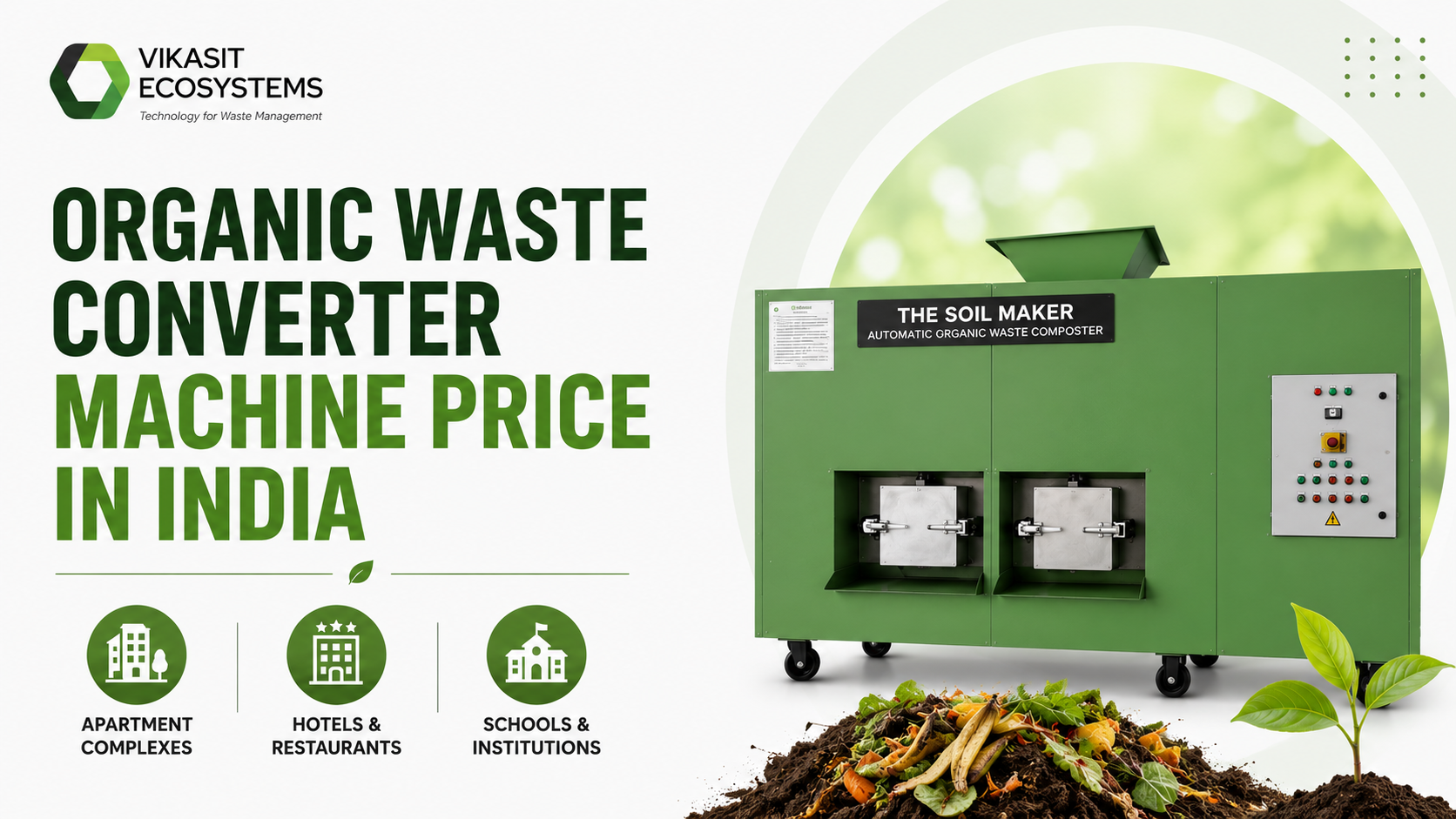
At a larger scale, Organic Waste Converters (OWCs) like Soil Maker — developed by Vikasit Ecosystems — turn kitchen waste into compost within hours. The output can be reused for landscaping, urban farming, or soil enrichment.
Why it matters:
Each tonne of composted food waste prevents nearly 300 kg of CO₂-equivalent emissions from reaching the atmosphere.
2️⃣ Segregating Waste at Source
You can’t manage what you don’t separate. When organic and plastic waste mix, neither can be recycled effectively.
Segregation is simple yet powerful: one bin for biodegradable waste, one for recyclables, and one for rejects.
At the community level, awareness drives and collection partnerships with companies like Vikasit Ecosystems ensure waste goes to the right treatment facility instead of a dumpsite.
3️⃣ Smarter Food Storage and Inventory Planning
A big chunk of food waste starts in kitchens — at homes and restaurants.
The causes? Over-purchasing, improper storage, and confusion about expiry dates.
Simple fixes:
- Plan weekly meals and shop accordingly.
- Store fruits and vegetables in separate drawers to avoid spoilage.
- Use older stock first (“first in, first out”).
- Train restaurant staff to track and minimize food prep waste.
Reducing over-purchasing alone can cut food waste by up to 25%.
4️⃣ Building Sustainable Food Supply Chains
A large share of food waste never even reaches consumers.
In India, poor cold-chain infrastructure and inefficient logistics cause 40% of fruits and vegetables to be lost before they hit the market.
Fixing the chain means:
- Investing in cold storage and temperature-controlled transport.
- Sourcing food locally to reduce travel emissions.
- Using technology like IoT sensors for real-time inventory and spoilage tracking.
Reducing “food loss” upstream is as important as managing waste downstream.
5️⃣ Food Redistribution and Donations
Much of the food we discard is still perfectly edible. Hotels, restaurants, and event venues can donate surplus meals to NGOs that serve the needy.
Organizations like Feeding India, No Food Waste, and Robin Hood Army already redirect tonnes of food every week.
Partnering with such programs not only reduces landfill waste but also supports social sustainability goals under CSR.
6️⃣ Anaerobic Digestion and Biogas Generation
Instead of letting food rot in dumps, it can be processed in anaerobic digesters to produce biogas — a renewable energy source.
Biogas systems convert organic waste into methane-rich gas for cooking or electricity generation, and produce bio-slurry, a natural fertilizer.
A medium-sized biogas plant can process up to 1 tonne of food waste daily and replace several LPG cylinders every month.
Vikasit Ecosystems works with institutions and municipalities to design customized biogas systems that turn waste into power — a true “waste-to-energy” model.
7️⃣ Consumer Awareness and Education
Real change begins with awareness.
Most people don’t connect their dinner plates to climate change — but education can fix that.
How to drive awareness:
- Run school and community workshops.
- Encourage home composting and portion control.
- Promote zero-waste cooking habits.
- Share stories of success — what gets measured, gets managed.
Even small steps, like reusing leftovers or buying only what’s needed, can collectively create a massive environmental difference.
8️⃣ Government Policies and Corporate Responsibility
Sustainable change requires strong policy and corporate leadership.
The government can promote food waste reduction through:
- Landfill bans on untreated organic waste.
- Tax incentives for composting and recycling units.
- Urban composting mandates in large housing projects.
Corporates, on the other hand, can integrate food waste reduction into ESG and CSR programs, implementing zero-waste kitchens or tracking waste reduction metrics.
At Vikasit Ecosystems, we help organizations design sustainability frameworks that align with India’s waste management goals and the UN Sustainable Development Goals (SDGs).
How Businesses and Communities Can Lead the Change
Communities, hotels, and institutions play a vital role in the transition toward a low-waste, low-carbon future.
With Vikasit Ecosystems, organizations can implement end-to-end waste management systems that include:
- Organic Waste Converters (Soil Maker)
- Waste Management as a Service (WMaaS)
- Customized sustainability consulting
These solutions don’t just reduce landfill waste — they create compost, renewable energy, and cleaner urban environments.
Explore:
Conclusion: Turning Waste into Climate Action
Food waste may seem small when you scrape it off your plate, but collectively it’s one of humanity’s largest environmental challenges.
Every uneaten meal means wasted water, land, and energy — and when it reaches a landfill, it contributes to global warming through methane emissions.
The good news? The solution is in our hands. Through composting, biogas generation, and responsible waste management, we can turn waste into a tool for climate action. At Vikasit Ecosystems, our mission is to build a cleaner, circular world — one where waste becomes a resource and sustainability is part of everyday life.
FAQ
How does food waste contribute to global warming?
When food decomposes without oxygen, it produces methane, a greenhouse gas that traps 25x more heat than carbon dioxide — intensifying global warming.
How big is India’s food waste problem?
India wastes around 68 million tonnes of food annually, much of it from households, restaurants, and marketplaces. This contributes significantly to urban methane emissions.
How does composting help the environment?
Composting keeps organic waste out of landfills, prevents methane formation, and produces natural fertilizer that enriches soil while storing carbon.
What are some practical ways to reduce food waste at home?
– Plan weekly meals
– Avoid overbuying perishables
– Label leftovers
– Use home composting bins
Even small steps can collectively reduce emissions.
What role does Vikasit Ecosystems play in this area?
Vikasit Ecosystems designs and implements organic waste management systems — from composting machines to large-scale WMAAS solutions — helping organizations reduce landfill waste and lower their carbon footprint.
Can cutting food waste really slow climate change?
Yes. Reducing global food waste by just 25% could eliminate emissions equivalent to taking 500 million cars off the road — making it one of the fastest paths to climate stability.

Written by the Sustainability Research Team at Vikasit Ecosystems – pioneers in decentralized organic waste management and creators of The Soil Maker. Follow us for updates on green innovations, circular economy, and urban resilience.