Food waste has become one of the biggest environmental and operational challenges for modern cities. Across India, millions of tonnes of food are thrown away each year by households, hotels, restaurants, tech parks, and commercial establishments. Without proper Food Waste Management, this waste ends up in overflowing landfills, producing methane, causing foul odour, and polluting air and groundwater.
As sustainability becomes a priority, businesses, apartments, and institutions are now shifting towards more structured and technology-driven solutions. Companies like Vikasit Ecosystems have been at the forefront of helping organizations handle food waste responsibly with their specialized machines and end-to-end waste management services. This blog explains everything you need to know about Food Waste Management, its importance, process, and modern solutions available today.
What is Food Waste Management?
Food Waste Management refers to the systematic process of collecting, segregating, processing, and converting food waste into useful by-products such as compost or soil conditioner. It ensures that food waste does not end up in landfills and instead becomes a resource.
Food waste primarily comes in three forms:
- Pre-consumer waste: vegetable peels, fruit scraps, expired food items, and kitchen prep waste.
- Post-consumer waste: leftover food from plates, buffet counters, canteens, and cafeterias.
- Bulk generator waste: waste produced in large quantities by hostels, hotels, corporate offices, and large residential societies.
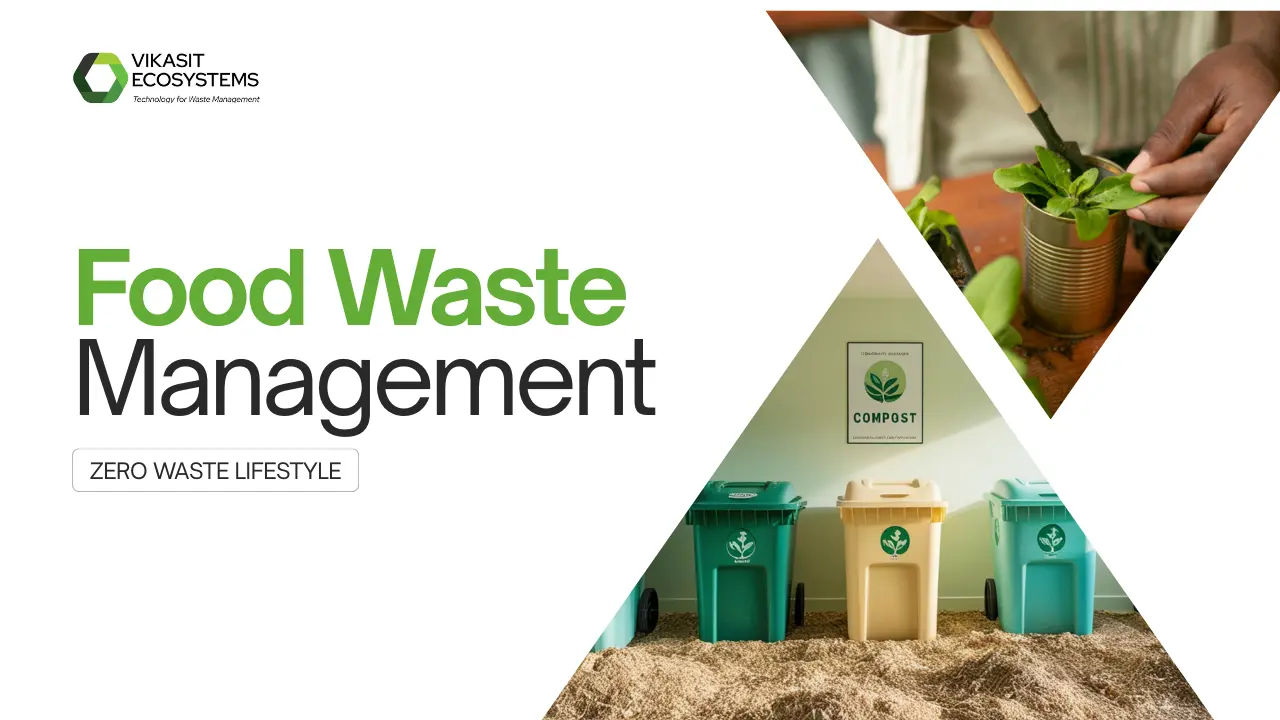
The foundation of efficient Food Waste Management begins with segregation at source. When biodegradable waste is kept separate from plastic, glass, and other dry waste, it can be easily processed and converted into compost.
The Real Impact of Food Waste
Food waste doesn’t just smell bad — it affects our environment, economy, and society in multiple ways.
Environmental Impact
When food waste is dumped in landfills, it decomposes without oxygen and releases methane, a greenhouse gas 28 times more harmful than carbon dioxide. It also leads to soil and groundwater pollution. Effective Food Waste Management significantly reduces this environmental load.
Economic Impact
Hotels, restaurants, and large kitchens lose money when they generate high levels of waste. They also incur additional costs for waste transport and disposal. A proper Food Waste Management system helps reduce operational costs and improves overall efficiency.
Social Impact
In a country where millions still go hungry, the wastage of edible food is a major social imbalance. By adopting responsible waste practices, organizations contribute positively to society and sustainability goals.
Steps of Effective Food Waste Management
A successful Food Waste Management system follows a structured, scientific process. Here are the key steps:
i. Segregation at Source
Businesses and apartments must ensure that wet waste (food waste) is separated from dry waste. Clear bins, labels, and awareness among staff or residents help maintain discipline
ii. Collection & Log Management
Food waste must be collected daily and recorded to understand waste patterns. This helps hotels, restaurants, and canteens reduce wastage at the source.
iii. Processing & Composting
There are multiple ways to process food waste:
- Aerobic Composting – natural decomposition with oxygen.
- In-vessel Composting – controlled composting inside a closed unit.
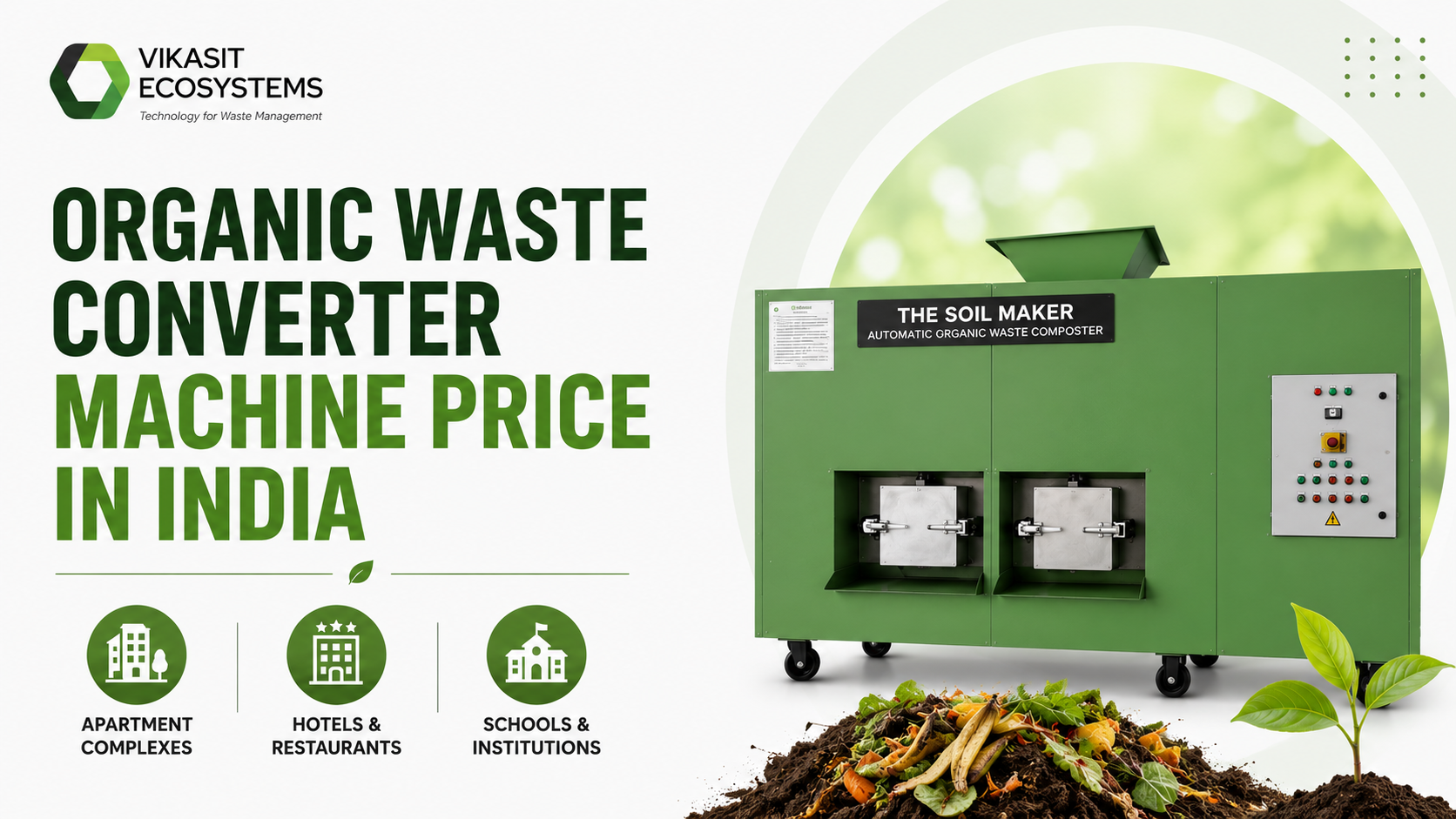
- Organic Waste Converters (OWCs) like “The Soil Maker” – machines that shred, heat, and process food waste to speed up composting.
OWCs are the most popular choice among modern businesses due to their speed, hygiene, and ease of operation.
iv. Conversion to Useful End Products
The compost generated can be used for:
- gardening,
- landscaping,
- farming, or
- distributed to residents or farmers.
v. Monitoring & Reporting
A good Food Waste Management system includes regular tracking of input vs output to ensure optimal performance and compliance with waste rules.
Modern Technologies in Food Waste Management
Technology has transformed how organizations manage food waste. Today’s systems offer:
- Smart Machines: modern OWCs come with odor-control systems, automatic and faster processing.
- IoT-based monitoring: helps track machine performance and waste volume.
- Energy-efficient designs: reduce electricity and manpower costs.
- Other products: Shredders, Conveyors, and Dewatering systems reduce manual effort.
Companies like Vikasit Ecosystems provide advanced, durable, and low-maintenance technology that makes Food Waste Management easy and efficient for bulk waste generators.
Benefits of Implementing a Strong Food Waste Management System
A well-designed Food Waste Management approach offers multiple long-term advantages:
- Compliance with Solid Waste Management Rules 2016 for bulk generators.
- Lower waste handling costs due to reduced dependence on municipal collection.
- Improved hygiene with zero foul smell and clean premises.
- Enhanced brand reputation, especially for hotels, restaurants, and corporates.
- Supports the circular economy, turning waste into a valuable resource.
- Reduces carbon footprint by cutting down methane emissions and landfill burden.
Businesses that adopt modern solutions not only save costs but also build a responsible sustainability image.
Food Waste Management Solutions by Vikasit Ecosystems
Vikasit Ecosystems is one of India’s leading providers of Food Waste Management technology and turnkey waste solutions. Their systems are designed to help businesses, apartments, institutions, and commercial kitchens manage food waste efficiently from collection to composting.
Introducing Soil Maker – The Next-Generation OWC
At the heart of their offering is Soil Maker, a next-generation Organic Waste Converter (OWC) designed for fast, hygienic, and odor-free composting. Soil Maker uses an advanced aerobic composting process, supported by shredding, controlled aeration, and optimized temperature management, to convert food waste into high-quality compost in a short duration.
Built with a robust stainless-steel body and engineered for long-term performance, Soil Maker provides:
- Faster composting cycles
- Odor-free operation
- Low maintenance
- Energy-efficient performance
- Scalability from 50 kg/day to 1 tonne/day
Because of its reliability and efficiency, Soil Maker has become a preferred solution for apartments, hotels, tech parks, corporate offices, and industrial facilities seeking modern Food Waste Management systems.
Additional Supporting Equipment
To create a complete, end-to-end solution, Vikasit Ecosystems also provides:
- Shredders for reducing waste size and enabling faster composting
- Bailing Machines for compacting dry waste
- Trommels for compost screening and refinement
- Conveyors for smooth and clean waste transfer
- Incinerators for non-recyclable dry waste management
Waste Management as a Service
For organizations that prefer outsourcing operations, Vikasit offers Waste Management as a Service, which includes:
- Daily waste collection
- Operation and maintenance of Soil Maker
- Skilled manpower deployment
- Reporting, compliance support, and documentation
With this service, businesses and residential societies can achieve seamless Food Waste Management without internal complexity.
How Businesses Can Start Food Waste Management Today
Starting Food Waste Management is easier than most organizations think. Here’s how businesses, apartments, and restaurants can get started:
- Audit your waste generation to understand quantity and type.
- Train staff or residents on proper segregation.
- Install the right equipment, such as shredders and OWCs.
- Choose a reliable service provider for installation, AMC, or full-service operations.
- Monitor and improve based on daily observations.
When businesses partner with an experienced provider like Vikasit Ecosystems, the transition becomes smooth and impactful.
Conclusion
Food Waste Management is no longer optional — it is a responsibility every business, apartment, and community must adopt to protect the environment. With the right technology and guidance, food waste can easily be converted into valuable compost, reducing landfill burden and promoting sustainability. By investing in modern waste solutions, organizations can build a cleaner, greener, and more efficient future.
Frequently Asked Questions
What is Food Waste Management and why is it important?
Food Waste Management refers to the process of collecting, segregating, processing, and converting food waste into useful by-products like compost. It is important because it reduces landfill waste, lowers methane emissions, improves hygiene, and supports sustainability goals for businesses and communities.
How can apartments and businesses start Food Waste Management?
They can begin by segregating wet and dry waste, auditing the daily waste quantity, installing equipment like Soil Maker Organic Waste Converters (OWCs), and training staff or residents. Partnering with a reliable provider like Vikasit Ecosystems makes the entire process seamless.
What types of machines are used in Food Waste Management?
Common machines include Organic Waste Converters (OWCs), shredders, trommels, bailing machines, and conveyors. Vikasit’s flagship OWC, Soil Maker, is a next-generation solution designed for fast, odor-free, and efficient composting.
How does the Soil Maker OWC work?
Soil Maker uses advanced aerobic composting to rapidly convert food waste into high-quality compost. It operates with complete odor control, ensuring a clean and hygienic environment. Its robust, low-maintenance design makes daily waste management effortless and efficient.
What are the benefits of using an OWC for Food Waste Management?
An OWC speeds up composting, eliminates odor, reduces waste handling costs, minimizes landfill contribution, and ensures compliance with Solid Waste Management Rules. It also produces usable compost that can be applied to gardens and landscapes.
Is Food Waste Management mandatory for bulk waste generators in India?
Yes. As per the Solid Waste Management Rules 2016, any establishment generating more than 100 kg of waste per day—such as hotels, apartments, hostels, restaurants, and corporate offices—must manage and process waste on-site using systems like OWCs or composting units.

Written by the Sustainability Research Team at Vikasit Ecosystems – pioneers in decentralized organic waste management and creators of The Soil Maker. Follow us for updates on green innovations, circular economy, and urban resilience.