
Carbon Credits
Through
Solid Waste Management
Turn organic waste into valuable resources while earning carbon credits and contributing to a cleaner, greener planet.
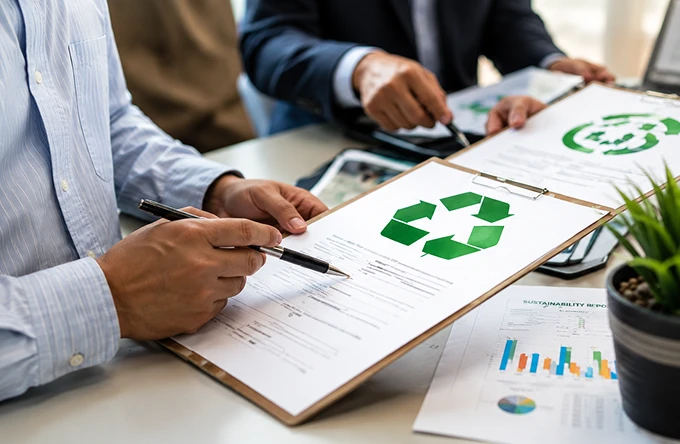
Waste–To–Climate Value
Effective solid waste management plays a vital role in mitigating climate change by significantly reducing greenhouse gas (GHG) emissions. Organic waste, when dumped in landfills, decomposes anaerobically and releases methane (CH₄)—a greenhouse gas that is over 25 times more potent than carbon dioxide over a 100-year period.
By adopting decentralized organic waste processing systems such as THE SOIL MAKER™ Organic Waste Composting Machine, organic waste is converted into nutrient-rich compost through an aerobic process, preventing methane generation and reducing the overall carbon footprint.
How Carbon Credits Are Generated
Sustainable waste management projects can generate carbon credits by:
These Credits Can Be Certified Under Recognized Carbon Standards And Traded In Voluntary Or Compliance Carbon Markets, Creating An Additional Revenue Stream For Waste Management Projects.
Environmental & Economic Benefits
By Integrating Advanced Composting Technology With Carbon Credit Mechanisms, Vikasit Ecosystems Pvt. Ltd. Enables Organizations, Municipalities, Institutions, And Industries To Transform Organic Waste Into Valuable Resources While Contributing To Global Climate Action And Creating Measurable Environmental And Economic Value.
Real Impact. Measurable Results.
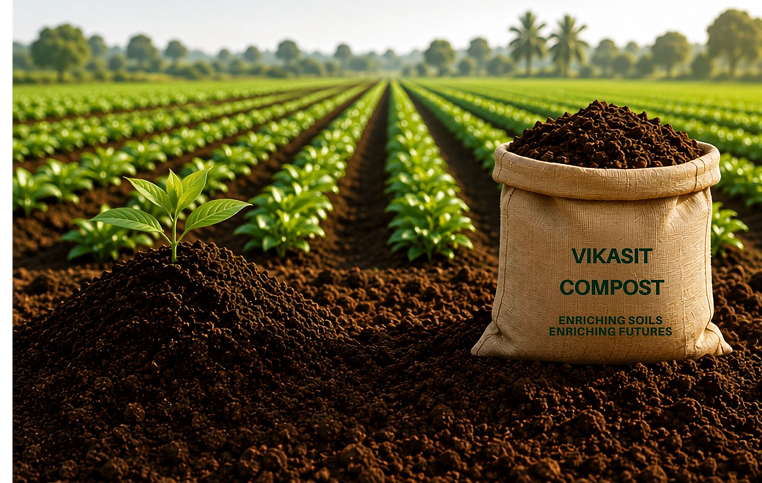
Real Impact. Measurable Results.
Current Processing:
- •Approximately 800kg/day of food waste
- •About 962 tonnes/year of organic waste diverted from landfill
Environmental Benefits Include:
- •Methane emissions avoided
- •Compost production
- •Reduced transportation emissions
- •Cleaner environment
- •Lower landfill burden
Municipal Corporations
Processing Capacity & Waste Delivered:
- •A Municipal Corporation Processing: 5 TONNES/DAY
- •Annual Waste Delivered: = 1,825 TONNES/YEAR
Benefits:
- •Large methane avoidance
- •Lower landfill costs
- •Reduced transportation
- •Carbon credit potential
- •Improved Swachh Bharat performance
- •ESG reporting support

DLF, IT PARKS & COMMERCIAL CAMPUSES
For Large Campuses:
- •Hotels
- •IT Parks
- •Residential Communities
- •Shopping Malls
THE SOIL MAKER Enables:
- •On-site waste treatment
- •Zero landfill organic waste
- •Lower Scope 3 emissions (where applicable)
- •Sustainability reporting
- •Green building support
- •Potential participation in voluntary carbon markets through aggregated projects.
Real Impact. Measurable Results.
Current Processing:
- •Approximately 800kg/day of food waste
- •About 962 tonnes/year of organic waste diverted from landfill
Environmental Benefits Include:
- •Methane emissions avoided
- •Compost production
- •Reduced transportation emissions
- •Cleaner environment
- •Lower landfill burden
Municipal Corporations
Processing Capacity & Waste Delivered:
- •A Municipal Corporation Processing: 5 TONNES/DAY
- •Annual Waste Delivered: = 1,825 TONNES/YEAR
Benefits:
- •Large methane avoidance
- •Lower landfill costs
- •Reduced transportation
- •Carbon credit potential
- •Improved Swachh Bharat performance
- •ESG reporting support
DLF, IT PARKS & COMMERCIAL CAMPUSES
For Large Campuses:
- •Hotels
- •IT Parks
- •Residential Communities
- •Shopping Malls
THE SOIL MAKER Enables:
- •On-site waste treatment
- •Zero landfill organic waste
- •Lower Scope 3 emissions (where applicable)
- •Sustainability reporting
- •Green building support
- •Potential participation in voluntary carbon markets through aggregated projects.